About
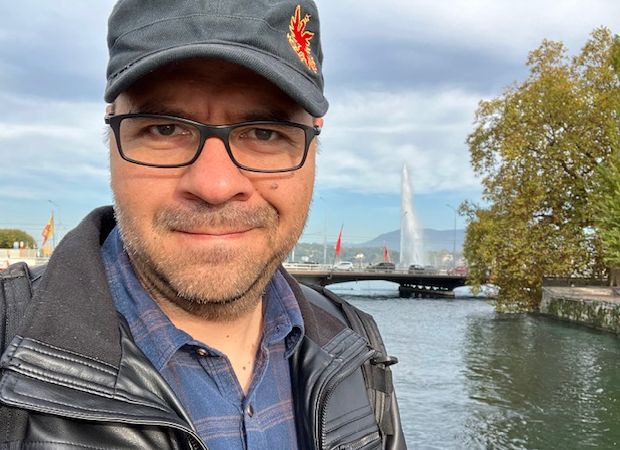
I am an Associate Professor in the School of Government and Public Policy at the University of Arizona. I earned my Ph.D. in Political Science from the University of Notre Dame.
My research interests focus on understanding the micro-foundations and dynamics of political and criminal violence in Latin America. Why are some countries ravaged by high levels of political and organized crime violence? What are the paths for building safer, more peaceful and democratic countries? These are the core questions guiding my research interests.
I address this agenda with a solid quantitative toolset including quasi-experimental and experimental techniques, natural language processing (NLP), Machine Learning (ML), Large Language Models (LLMs), and geographic information systems (GIS).
Rather than using generic LLMs, my work on Computatoinal Social Science tools focuses on developing cyber-infrastructure and applications specialized for political science research.
My fieldwork experience primarily focuses on Latin America, with a particular emphasis on Mexico, Colombia, El Salvador, Guatemala, and Honduras.
Check out my research.
Check out my Google Scholar.
Teaching
Rec Letters
If you want to request a recommendation letter from me, please be advised that I take these requests seriously as both our reputations are at stake. Strong letters of recommendation usually are the product of long and close relationships with faculty, so consider whether I am the most appropriate individual to ask for a letter.
I generally write a recommendation letter for students who:
- Took at least one course with me.
- Excelled in the course with a final grade "A".
- Worked with me as a research assistant at least one semester with good performance.
When requesting a recommendation letter, please consider the following procedure:
- Discuss with me the recommendation request before sending me the auto-generated email from the program you are applying for.
- Make a recommendation letter request by email at least three weeks in advance.
- Include the following information in a single email.
- Updated CV.
- Your transcripts and GPA.
- Relevant documents such as a statement of purpose or application letter.
- A brief description of the program, job, institution to which I will be addressing the letter. Include links with relevant information.
- A note with suggestions of what I should emphasize in the letter.
Back to top.
Graduate Courses
- Micro-dynamics of Political and Criminal Violence
- This seminar aims at exposing graduate students to the state-of-the-art research on political and organized criminal violence. To do so, the seminar has a deliberate interdisciplinary approach integrating scholarship on conflict, economics, geography, political psychology, and criminology to disentangle the micro-dynamics of political violence and organized crime. The micro-dynamic approach of this seminar will largely depart from country-year unit of analysis and dive into the subnational or individual level of analysis. At the seminar, we will engage in a collective intellectual endeavor to analyze each assigned reading in depth. The discussions will pay particular attention on the theoretical and conceptual contributions and debates, as well as on the empirical innovations and identification strategies in the field. These discussions will help graduate students to identify gaps in the literature as well as emerging niches that might motivate their own research agenda.
- Panel Data
- Political Scientists across subfi�elds require analyzing and explaining the behavior of several units of analysis over time. These could be individuals, countries, municipalities, institutions, groups, �rms, etc. that display di�erent behavioral trends over time and across space. This course o�ers graduate students the opportunity to develop methodological skills for understanding and performing quantitative analyses of time series cross-sectional (TSCS) data, also known as panel data. The topics covered in this course include the speci�cation, estimation, evaluation, and inference of �xed and random e�ects models for continuous, categorical, and count data in time series cross-sectional studies. The basic model speci�cation will be extended to more advanced methods such as dynamic models, instrumental variables, generalized method of moments, and spatial econometric models for panel data.
- LaTex crash course
- This hands-on workshop is designed to introduce graduate students to the use of LaTeX editor. After successfully completing this workshop, students will be able to (i) write their own academic papers using LaTeX, and (ii) develop their own academic presentation slides using LaTeX.
Back to top.
Undergraduate Courses
- Crime Reduction: What Works?
- This course introduces students to the study of crime control policies, examining the scientific foundations of crime studies as well as policy evaluation in the security sector. It provides an overview of the evidence on the effectiveness of various crime control policies using a comparative perspective that integrates evidence on security policies implemented in the US and Latin America.
- Violent Crime and Political Order
- This course explores the intriguing politics of law enforcement and organized crime from a political- economy perspective. The course will help students to develop analytical skills to understand the root causes of political repression and organized criminal violence, and to critically assess the e�ectiveness of law enforcement e�orts. The course has a comparative perspective with a particular emphasis on Latin America. The course is divided into �ve main sections. The �rst part overviews theoretical foundations highlighting the di�erences and similarities of political and criminal order from a critical perspec- tive. The second part analyzes the empirical and political challenges of measuring crime and illicit markets, and covers crime trends in the U.S. The third section analyzes illicit markets from an economic perspective. The fourth segment addresses ongoing issues related to policing in the U.S. The �fth segment surveys the historical origins of the drug control regime in Latin America and explores the causes and e�ects of drug violence in the region.
Back to top.
Previous Courses
- Politics of International Security
- The second half of the twentieth century has been marked by violence, bloodshed, and political upheaval. The primary source of this wave of violence is not international warfare between rival states, but internal political violence affecting a variety of governments across the globe. This course is designed to introduce students to the comparative study of civil wars. The objective of the course is devoted to understanding (1) key social, economic and political causes of civil war onset; (2) identifying the main tendencies in the conduct of civil wars; and (3) gaining factual knowledge about specific case studies. The course will cover topics such as the onset of civil wars, natural resources, political instability, recruitment strategies, rebel organization, child soldiering, lethality and tactics of violence, duration and termination. At the end of this course, students will have a solid understanding of the determinants and characteristics of civil wars from a comparative perspective. The course is structured as a seminar, and we will engage in a collective and critical discussion about the main findings, debates, strengths and limitations of different ideas and methodologies for studying civil war.
- Colloquium on Research in Government and Politics
- This course offers the opportunity for students to design and conduct their own independent research. As such, this course inverts the traditional instructor-student relationship. Instead of the professor being the main driver of the learning experience, students are expected to take the lead in their own learning and research process while the professor serves as a guide. The readings and assignments will guide the students through the challenges of formulating analytical research questions, proposing plausible arguments, evaluating scholarly research, developing concepts, identifying valid ways to measure them and assessing the advantages and limitations of different methodological approaches. Since both the policy and academic sectors rely heavily on quantitative analysis to support their claims and engage in evidence-based debates, this course will help students to acquire skills to conduct and interpret basic quantitative research. The final research paper will demonstrate the student's familiarity with relevant literature in the subfield, capability to engage in relevant academic or policy debates, mastery of basic concepts in the discipline, competence in advancing convincing explanations and providing solid empirical support, and capability to communicate effectively.
- International Crime and Justice - Capstone Seminar
- This course will synthesize the knowledge and perfect the skills gained throughout Masters coursework and allow students to compare and contrast the multidisciplinary perspectives gained throughout their studies. A core component of the course consists of conducting a series of quantitative studies on criminal behavior using data from the United Nations Office of Drugs and Crime (UNODC). The research will concentrate on the following topics: comparative correlates of crime, homicides, criminal victimization, political institutions and economic indicators. In addition to a final academic paper, students will produce evidence-based policy briefs to be presented to UNODC officials.
- Politics of Transnational Crime - Research Intensive
- This course offers students the opportunity to explore the intriguing world of transnational organized crime from a rigorous methodological perspective combined with solid theoretical foundations. With a particular focus on drug-trafficking organizations in Latin America, the course will help students to develop analytical skills and acquire practical research experience in order to identify main trends and causes of drug-trafficking in the region. The course is divided in two sections. The first part overviews the main theoretical foundations and discusses key empirical challenges for analyzing transnational organized crime. The second section explores the characteristics and causes of drug trafficking in Latin America. In addition to acquiring substantive knowledge on the topic and on the region, this course includes a research component. As part of the course activities, we will build a database of the territorial presence of drug trafficking organizations in Latin America. To conduct this task, students will learn how to use specialized software for gathering, reformatting, and processing textual information from news reports in order to extract numeric data for quantitative analysis. This course is possible thanks to the support of the Research Intensive Course Design Award of the Office of Undergraduate Research.
- Introduction to Comparative Politics
- This course provides a broad overview of the main theoretical approaches in the subfield of comparative politics by focusing on important substantive questions about the world. The course is organized around six key questions. First, how can we understand the world from a comparative perspective? Second, how do nation states emerge? Third, why are there different types of political regimes? Fourth, what are the different types of political institutions in modern democracies? Fifth, why do people organize along social, ethnic or political identities? Sixth, why do people challenge the established political order? The course will expose students to the main theoretical arguments and debates answering these questions. In addition, the course assignments will allow students to gain substantive knowledge about specific cases.
Back to top.
CV

Download my CV.
Contact

Email: josorio1(at)arizona.edu
- University of Arizona
- School of Government and Public Policy
- Office 315
- 1145 E South Campus Dr
- Tucson, AZ 85719
Phone: 520-621-4607
Research
Research Teams
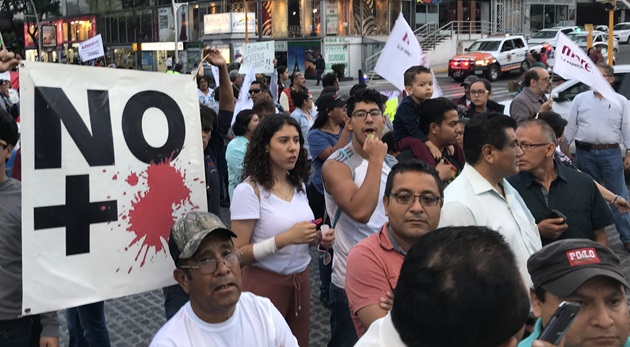
I have been able to participate as PI or Co-PI in three major collaborative research projects:
Infrastructure For Political and Social Event Data
- This project contributes to the computerized extraction of conflict event data at a global scale.
- Collaborators: Patrick T. Brandt, Vito D'Orazio, and Latifur Khan.
- Funding: NSF (1539302, 1931541, 220162, 2311142).
Armed Governance
- This project uses online expert sureys to gather systematic data on armed governance in Mexico, Colombia, and Afghanistan.
- Collaborators: Desmond Arias and Harold Trinkunas.
- Funding: DoD Minerva (71623-LS-MRI) and NSF (2116406).
Academy for Security Analysis
- This large project ($US5M) consisted on training government agencies and civil society organizations from Hondruas, Guatemala, and El Salvador on implementing Randomized Controlled Trials (RCTs) to assess the impact of public policies in the security and justice sectors..
- Collaborators: Michael Weintraub, Andres Ham, and Reynaldo Rojo.
- Funding: USAID (519-15-000001).
- The project's website is no longer available due to the dismanteling of USAID.
Back to top.
Refereed Journal Articles
-
2025.
Extractive versus Generative Language Models for Political Conflict Text Classification.
- Patrick T. Brandt, Sultan Alsarra, Vito J. D’Orazio, Dagmar Heintze, Latifur Khan, Shreyas Meher, Javier Osorio, and Marcus Sianan.
- Political Analysis, 1-29, (online first).
- Check out video summary here.
-
2025.
Multilingual approaches to extractive question answering in political texts.
- Sultan Alsarra, Mubarak Alrashoud, Javier Osorio, Vito D’Orazio, Latifur Khan, and Patrick T. Brandt.
- Computational and Mathematical Organization Theory. 31, 299–322.
-
2025.
Demand and Supply of Criminal Governance: Experimental Evidence from Mexico, Honduras, Guatemala, and El Salvador.
- Javier Osorio and Susan Brewer-Osorio.
- American Political Science Review, 1-18, (online first).
-
2023.
Are Many Sets of Eyes Better Than One? Evaluating Multiple Databases of Armed Actors in Colombia.
- Javier Osorio.
- International Iterations, special issue on the Micro-dynamics of Conflict in Colombia, 49(2): 268-285.
-
2022.
Conflict Forecasting with Event Data and Spatio-Temporal Graph Convolutional Networks.
- Patrick T. Brandt, Vito D'Orazio, Latifur Khan, Yi-Fan Li, Javier Osorio, and Marcus Sianan.
- International Iterations, special issue on Conflict Forecasting, 48(4):800-822.
-
2021.
Legacies of Resistance: Mobilization Against Organized Crime in Mexico.
- Javier Osorio, Livia Schubiger, and Michael Weintraub.
- Comparative Political Studies, 54(9):1565-1596.
-
2020.
Carrots and Sticks: Experimental Evidence of Vote Buying and Voter Intimidation in Guatemala.
- Ezequiel Gonzalez, Chad Kieweit de Jonge, Carlos Melendez, David Nickerson, and Javier Osorio.
- Journal of Peace Research, special issue on electoral violence, 57(1):46-61.
-
2019.
Translating CAMEO Verbs for Automated Coding of Event Data.
- Javier Osorio, Viveca Pavon, Jennifer Holmes, Sayeed Salam, Patrick T. Brandt, and Latifur Khan.
- International Interactions, 45(6): 1049-1064.
-
2018.
Disappearing Dissent? Repression and State Consolidation in Mexico.
- Javier Osorio, Livia Schubiger, and Michael Weintraub.
- Journal of Peace Research, 55(2): 252-266.
-
2017.
Supervised Event Coding from Text Written in Spanish: Introducing Eventus ID.
- Javier Osorio and Alejandro Reyes.
- Social Science Computer Review, 35(3): 406-416.
-
2015.
Contagion of Drug Violence: Spatio-temporal Dynamics of the Mexican War on Drugs.
- Javier Osorio.
- Journal of Conflict Resolution, special issue on Mexican Drug Violence, 59(8): 1403-1432.
-
2012.
Social Desirability Bias in Vote Buying: Experimental Evidence from Nicaragua.
- Ezequiel Gonzalez, Chad Kieweit de Jonge, Carlos Melendez, Javier Osorio, and David Nickerson.
- American Journal of Political Science, 56(1): 202-217.
- Back to top.
Peer-Reviewed Conference Publications
-
2025.
Conflict Event Actor Prediction using Spatial Graph Neural Networks.
- Niamat Zawad, Latifur Khan, Patrick Brandt, Vito D’Orazio, and Javier Osorio.
- IEEE International Conference on Big Data - Special Session on Machine Learning on Big Data (MLBD 2025), Macau SAR, China, 8-11 December (forthcoming).
-
2025.
QAACoder: A Question Answering Approach to Actor Detection in the Conflict and Mediation Domain.
- Mohammadsaleh Hosseini, Munawara Saiyara Munia, Latifur Khan, Patrick Brandt, Javier Osorio, and Vito D’Orazio.
- Pacific Rim International Conference on Artificial Intelligence (PRICAI 2025), Wellington, New Zealand, 17-21 November (forthcoming).
-
2025.
Advancing Active Learning with Ensemble Strategies.
- Naif Alatrush, Sultan Alsarra, Afraa Alshammari, Luay Abdeljaber, Niamat Zawad, Latifur Khan, Patrick T. Brandt, Javier Osorio, and Vito J. D’Orazio.
- Proceedings of Recent Advances in Natural Language Processing (RANLP 2025), Varna, Bulgaria, 8-10 Sept.
-
2025.
The Devil is in the Details: Assessing the Effects of Machine-Translation on LLM Performance in Domain-Specific Texts.
- Javier Osorio, Afraa Alshammari, Naif Alatrush, Dagmar Heintze, Amber Converse, Sultan Alsarra, Latifur Khan, Patrick T. Brandt, and Vito D’Orazio.
- The 20th Machine Translation Summit (MT Summit 2025), Geneva, Switzerland, 23-27 June.
-
2024.
ConfliLPC: Logits and Parameter Calibration for Political Conflict Analysis in Continual Learning.
- Xiaodi Li, Niamat Zawad, Latifur Khan, Patrick Brandt, Javier Osorio, and Vito D'Orazio.
- 11th IEEE Special session on Privacy and Security of Big Data (PSBD 2024).
-
2024.
Keep it Local: Comparing Domain-Specific LLMs in Native and Machine Translated Text using Parallel Corpora on Political Conflict.
- Javier Osorio, Sultan Alsarra, Amber Converse, Afraa Alshammari, Dagmar Heintze, Latifur Khan, Naif Alatrush, Patrick Brandt, Vito D'Orazio, Niamat Zawad, and Mahrusa Billah.
- The 2nd International Conference on Foundation and Large Language Models (FLLM2024).
-
2024.
Extractive Question Answering for Spanish and Arabic Political Text.
- Sultan Alsarra, Parker Whitehead, Naif Alatrash, Luay Abdeljaber, Latifur Khan, Javier Osorio, Patrick T. Brandt, and Vito D'Orazio,.
- 17th International Conference on Social Computing, Behavioral-Cultural Modeling, and Prediction and Behavior Representation in Modeling and Simulation.
- Best Paper Award SBP-BRiMS 2024
-
2024.
Leveraging Codebook Knowledge with NLI and ChatGPT for Zero-Shot Political Relation Classification.
- Yibo Hu, Erick Skorupa Parolin, Latifur Khan, Patrick T. Brandt, Javier Osorio, and Vito D'Orazio.
- The 62nd Annual Meeting of the Association for Computational Linguistics (ACL 2024).
-
2023.
ConfliBERT-Spanish: A Pre-trained Spanish Language Model for Political Conflict and Violence.
- Wooseong Yang, Sultan Alsarra, Luay Abdeljaber, Niamat Zawad, Zeinab Delaram, Javier Osorio, Latifur Khan, Patrick Brandt, and Vito D’Orazio.
- 7th IEEE Congress on Information Science and Technology (CiSt 2023).
-
2023.
Classifying Organized Criminal Violence in Mexico using ML and LLMs.
- Javier Osorio and Juan Vasquez.
- Proceedings of the 6th Workshop on Challenges and Applications of Automated Extraction of Socio-political Events from Text, The 14th International Conference on Recent Advances in Natural Language Processing (RANLP 2023).
-
2023.
ConfliBERT-Arabic: A Pre-trained Arabic Language Model for Politics, Conflicts and Violence.
- Sultan Alsarra, Luay Abdeljaber, Wooseong Yang, Niamat Zawad, Latifur Khan, Patrick Brandt, Javier Osorio, and Vito D’Orazio.
- Proceedings of the 2023 Recent Advances in Natural Language Processing conference (RANLP 2023).
-
2022.
Confli-T5: An AutoPrompt Pipeline for Conflict Related Text Augmentation.
- Erick Skorupa Parolin, Yibo Hu, Latifur Khan, Patrick T. Brandt, Javier Osorio, and Vito D’Orazio.
- Proceedings of the 2022 IEEE International Conference on Big Data (IEEE BigData 2022).
-
2022.
ConfliBERT: A Pre-trained Language Model for Political Conflict and Violence.
- Yibo Hu, Mohammad Saleh Hosseini, Erick Skorupa Parolin, Javier Osorio, Latifur Khan, Patrick Brandt, and Vito D’Orazio.
- Proceedings of the 2022 Conference of the North American Chapter of the Association for Computational Linguistics: Human Language Technologies (NAACL 2022).
-
2021.
CoMe-KE: A New Transformers Based Approach for Knowledge Extraction in Conflict and Mediation Domain.
- Erick Skorupa Parolin, , Yibo Hu, Latifur Khan, Javier Osorio, Patrick T. Brandt, and Vito D'Orazio.
- Proceedings of the 2021 IEEE International Conference on Big Data (IEEE Big Data 2021).
-
2021.
3M-Transformers for Event Coding on Organized Crime Domain.
- Erick Skorupa Parolin, Latifur Khan, Javier Osorio, Patrick T. Brandt, Vito D'Orazio, and Jennifer S. Holmes.
- Proceedings of the 2021 IEEE 8th International Conference on Data Science and Advanced Analytics (DSAA 2021).
-
2020.
Enhancing the Detection of Criminal Organizations in Mexico using ML and NLP
.
- Javier Osorio and Alejandro Beltran.
- International Joint Conference on Neural Networks (IJCNN 2020).
-
2020.
HANKE: Hierarchical Attention Networks for Knowledge Extraction in Political Science Domain.
- Erick Parolin Skorupa, Latifur Khan, Vito D'Orazio, Javier Osorio, Patrick Brandt and Jennifer Holmes.
- Proceedings of the 2020 IEEE International Conference on Data Science and Advanced Analytics (DSAA 2020).
-
2020.
Automatic Event Coding Framework for Spanish Political News Articles.
- Sayeed Salam, Latifur Khan, Amir El-Ghamry, Patrick Brandt, Jennifer Holmes, Vito D’Orazio, and Javier Osorio.
- 2020 IEEE 6th International Conference on Big Data Security on Cloud (BigDataSecurity), IEEE International Conference on High Performance and Smart Computing, (HPSC), and IEEE International Conference on Intelligent Data and Security (IDS).
-
2020.
Supervised Event Coding from Text Written in Arabic: Introducing Hadath.
- Javier Osorio, Alejandro Reyes, Alejandro Beltrán, and Atal Ahmadzai.
- Proceedings of the Workshop on Automated Extraction of Socio-political Events from News 2020 (AESPEN 2020), European Language Resources Association (ELRA).
-
2019.
Mapping Violent Presence of Armed Actors.
- Javier Osorio, Mohamed Mohamed, Viveca Pavon, and Susan Brewer-Osorio.
- Advances in Cartography in GIScience of the International Cartographic Association, 1, 1-16.
- Back to top.
Unrefereed Manuscripts
-
2023.
Synthesizing Political Zero-Shot Relation Classification via Codebook Knowledge, NLI, and ChatGPT.
- Yibo Hu, Erick Skorupa Parolin, Latifur Khan, Patrick T. Brandt, Javier Osorio, and Vito D'Orazio.
- SocArXiv.
-
2020.
An Online Structured Political Event Dataset Based on CAMEO Ontology.
- Sayeed Salam, Patrick T. Brandt, Vito D'Orazio, Jennifer Holmes, Javier Osorio, and Latifur Khan.
- SocArXiv.
-
2014.
Numbers Under Fire: The Challenges for Conducting Quantitative Research in Violent Settings.
- Javier Osorio.
- Social Science Research Council, Drugs Security and Democracy Program. Working Papers Series on Research Security. No. 6.
-
2010.
What the Afghan War Diary Really Tells Us.
- Javier Osorio and Christopher Sullivan.
- Small Wars Journal.
-
2010.
¿Es Posible Contabilizar la Compra del Voto en México?.
- Javier Osorio.
- FEPADE Difunde, 19, pp. 135-152.
- Back to top.
Commissioned Policy Reports
-
2023.
Colombia Resilient Communities Midterm Performance Evaluation Final Report.
- Javier Osorio, Liliana Duica, Daniel Mejia, and Daniela Ospina.
- United States Agency for International Development}{Bogota, Colombia.
-
2015.
Informe Especial Sobre Libertad del Sufragio en México.
- Gonzalez, Ezequiel, Chad Kieweit de Jonge, Carlos Melendez, David Nickerson, and Javier Osorio.
- Instituto Federal Electoral, Mexico City, Mexico.
-
2012.
Aproximación a las percepciones de la ciudadanía sobre la compra de votos y la intimidación de votantes en el régimen político guatemalteco.
- Gonzalez, Ezequiel, Chad Kieweit de Jonge, Carlos Melendez, David Nickerson, and Javier Osorio.
- National Democratic Institute, Guatemala City, Guatemala.
-
2012.
Caso de Estudio Mexicano.
- Javier Osorio.
- in Natalia Torres (ed.), Acceso a la información y datos personales: una vieja tensión, nuevos desafíos, Centro de Estudios para la Libertad de Expresión y Acceso a la Información – Open Society Foundations (CELE-OSF), Buenos Aires – Mexico.
- Back to top.
Software
My software and Large Language Models (LLMs) are publicly available in GitHub and Hugging Face.
-
2022.
ConfliBERT: A Pre-trained Language Model for Political Conflict and Violence.
- Yibo Hu, Mohammad Saleh Hosseini, Erick Skorupa Parolin, Javier Osorio, Latifur Khan, Patrick Brandt, Vito D’Orazio.
- Available in GitHub.
-
2020.
Hadath: Supervised Event Coding from Text Written in Arabic.
- Javier Osorio and Alejandro Reyes.
- Version 1.0, Perl programming language.
- Available in GitHub.
-
2019.
GWS – Gigaword split.
- Javier Osorio and Alejandro Reyes.
- Version 1.0, Perl programming language.
- Available in GitHub.
-
2019.
GWS – Gigaword split.
- Javier Osorio and Alejandro Reyes.
- Version 1.0, Perl programming language.
- Available in GitHub.
-
2014.
Eventus ID: Supervised Event Coding From Text Written in Spanish.
- Javier Osorio and Alejandro Reyes.
- Version 1.0, Perl programming language, copyright registration number 1-1520103493.
- Available in GitHub.
-
2014.
Web2Eventus.
- Javier Osorio and Alejandro Reyes.
- Version 2.0, Perl programming language, copyright registration number 1-1520103568.
- Available in GitHub.
-
2014.
Web Text Downloader.
- Javier Osorio and Alejandro Reyes.
- Version 2.0, Delphi programming language, copyright registration number 1-1520103399.
- Available in GitHub.
- Back to top.